
Which Heating System Makes Sense for Your Home?
Homeowners across Owings Mills and the surrounding Baltimore County area ask us the same question almost every fall: should the next heating system be a furnace, a heat pump, or both? The honest answer depends on the house, the existing ductwork, the electrical panel, and how the home is currently set up. At Victory HVAC, we install and service heating systems throughout this region every week, and the patterns we see on the job tell a clear story. This guide walks through what actually works in Maryland winters, based on real field experience rather than generic advice.
What Heating Systems Are Most Common in Owings Mills Homes?
Most homes in Owings Mills and the wider Baltimore County area run on natural gas furnaces. We see two main efficiency tiers in the field:
- 80% efficiency furnaces: standard-efficiency units that vent through a metal flue pipe.
- 90%+ efficiency furnaces: high-efficiency condensing units that vent through PVC pipe and waste less fuel.
Natural gas access across this part of Maryland makes the furnace the default starting point for most households. That said, the equipment homeowners are choosing for new installs and replacements is shifting fast, which brings us to heat pumps.
When Does a Heat Pump Make Sense Over a Furnace?
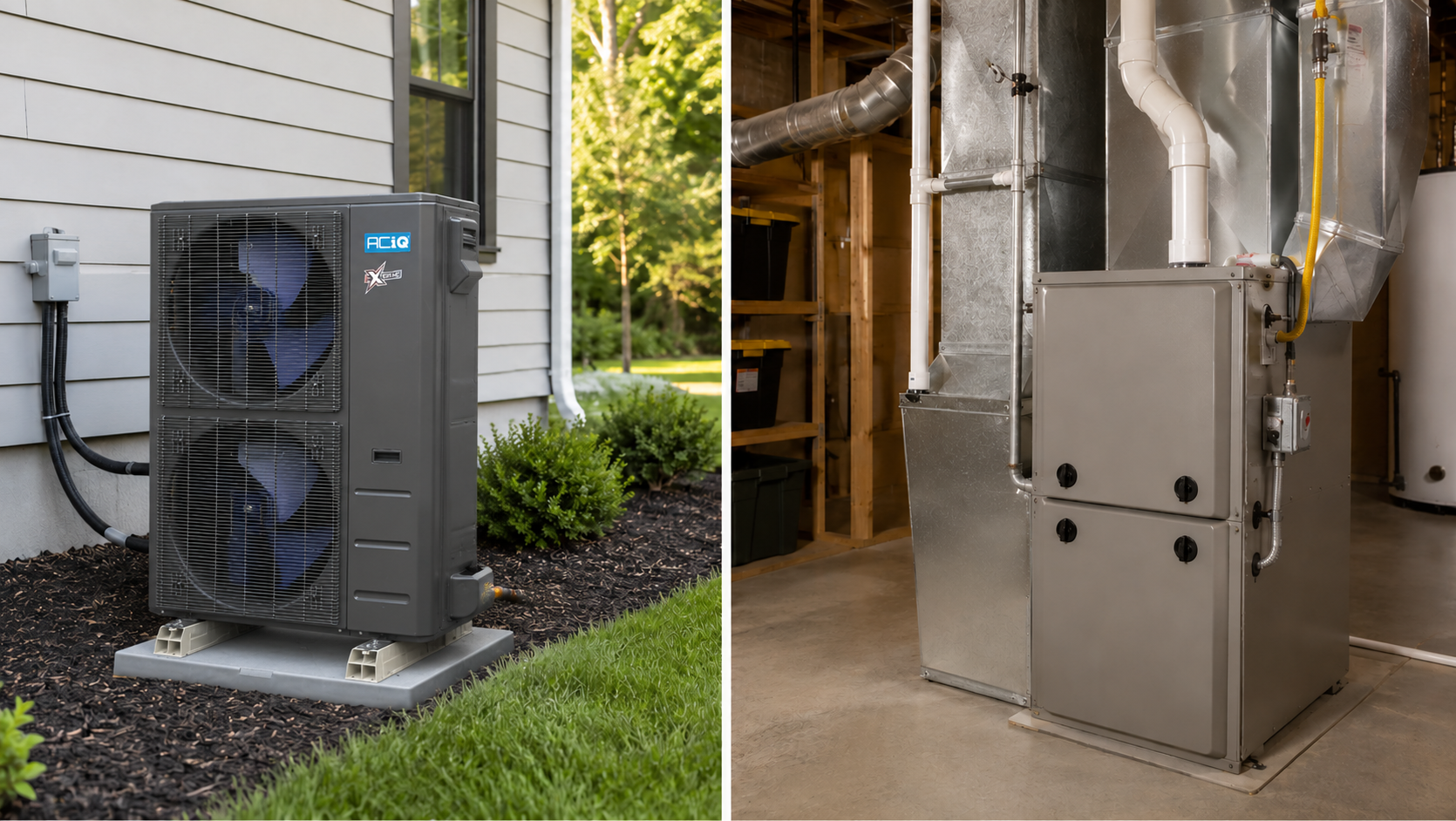
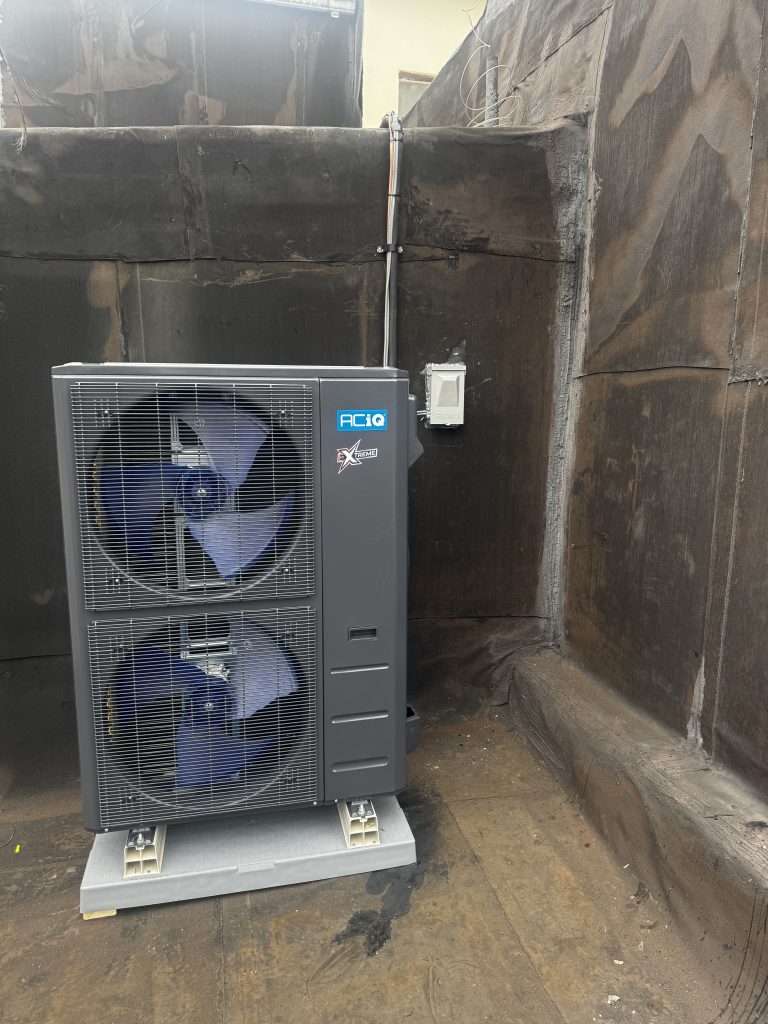
Given where heat pump technology stands today, we recommend adding a heat pump to nearly every system we install. The approach we use most often is a hybrid system: the heat pump runs as the primary heat source, and the gas furnace stays in place as emergency or backup heat. This setup, sometimes called dual fuel, lets the home draw on whichever source makes sense for the conditions outside.
This is not a question of picking one system and discarding the other. The two work together. Inverter-driven heat pumps adjust their output to match the actual heating load of the home rather than simply switching on and off at full power. That keeps the amp draw low and reduces strain on the electrical system. Natural gas remains a solid fuel for furnaces, but it can get expensive to run as the primary heat source. A dual-fuel home gets to choose the more cost-effective option on any given day, automatically or manually, depending on the thermostat setup.
When Does a Furnace Make More Sense on Its Own?
A furnace earns its place in a heating system for a few practical reasons. Choose any of the following that apply to your situation:
- Strong heating performance in the coldest stretches of winter
- Reliable operation regardless of outdoor temperature
- Compatibility with existing ductwork already installed in the home
- Lower upfront cost compared to some all-electric configurations
For most homes we work on, the furnace’s real value shows up as the backup half of a hybrid system rather than as a standalone choice. It gives the home a dependable fallback on the days the heat pump needs support.
Are Heat Pumps a Good Option for Maryland Winters?
Heat pumps are an excellent choice for this climate once the right product is selected. The cold-climate heat pumps Victory HVAC installs continue working at temperatures as low as -22°F. That kind of low-temperature performance puts Baltimore County winters well within the comfortable operating range of modern equipment.
This lines up with what independent research has found. According to EnergySage, traditional electric heat pumps typically lose efficiency at or below 35°F, but cold-climate models maintain 100% of their rated efficiency down to 5°F, with some units holding steady even at -15°F, based on Department of Energy testing through the Cold-Climate Heat Pump Technology Challenge. A 2024 study from the National Renewable Energy Laboratory found that homeowners switching from electric resistance, fuel oil, or propane heating to a heat pump saw median annual savings of $300 to $650 (source: energysage.com/heat-pumps/heat-pumps-cold-climates/). The technology has moved well past the point where freezing temperatures are a real obstacle.
Biggest Benefits of Installing a Heat Pump
- Efficiency: inverter technology adjusts output to match the actual load instead of cycling on and off at full capacity.
- Easier installation in many cases, with fewer components to run and connect.
- No combustion to worry about since the system runs entirely on electricity.
- No risk of gas leaks because there is no gas line feeding the unit.
Biggest Benefits of Installing a Furnace
- Strong heating performance during the coldest days of the year.
- Reliable operation in cold weather without dependence on outdoor temperature thresholds.
- Works well with existing ductwork already in place in most older homes.
- Lower upfront cost in many standalone configurations.
Factors a Homeowner Should Consider Before Choosing
The electrical connection in the home plays a real role in this decision. Access to the equipment matters too. If the unit sits somewhere difficult to reach, such as an attic, we typically install a heat pump only. Otherwise, dual fuel is our standard recommendation, combining a heat pump with a gas furnace for backup.
Is One System More Expensive to Install Than the Other?
A gas furnace installation involves more components than most homeowners expect. The job typically requires gas piping, a smoke or flue pipe, and a combustion air source. Heat pumps generally need a higher electrical power draw to run, though this is not universal. Some air handlers used with heat pumps operate on standard 120-volt power, which simplifies the electrical side of the project.
Heat Pump vs Furnace: Quick Comparison
| Factor | Heat Pump | Gas Furnace |
| Fuel Source | Electricity | Natural gas |
| Efficiency | 18 SEER2+ with AHRI inverter technology | 80% to 90%+ AFUE depending on model |
| Cold-Weather Performance | Cold-climate models operate down to -22°F | Consistent regardless of outdoor temperature |
| Installation Components | Outdoor unit, air handler, electrical circuit | Gas line, flue/smoke pipe, combustion air source |
| Combustion Risk | None | Requires venting and combustion safety checks |
| Maintenance Needs | Routine filter and coil checks | Flame sensor cleaning, annual combustion testing |
| Best Role in the System | Primary heat source in a hybrid setup | Backup or emergency heat source |
Which System Is More Energy Efficient?
Heat pumps come out ahead on efficiency. The units we install use AHRI-rated inverter technology rated at 18 SEER2 and higher. That inverter-driven operation is what allows the system to scale its output to the actual heating demand of the home, rather than running at full power every time it kicks on.
Which System Needs More Maintenance?
Gas furnaces require more hands-on maintenance. The flame sensor needs regular cleaning, and a combustion test should be performed to confirm the unit is burning fuel safely and efficiently. Heat pumps have fewer combustion-related maintenance tasks since there is no flame or flue involved.
Signs You Should Replace Instead of Repair
A simple rule applies here. If the cost of a repair exceeds $2,000, replacement is the better move. At that price point, the money is better spent on a new system with a full warranty rather than patching an aging unit that will likely need more work soon.
Common Mistakes Homeowners Make When Choosing a New System
The most common mistake is replacing only one part of the system. If the AC unit has failed but the furnace still runs, the instinct is to replace just the AC. We recommend replacing both units together so the air conditioner and furnace match in age. This matters for warranty purposes. When a new HVAC system is installed, the warranty is issued for the set on the same day, and mismatched ages can complicate coverage down the road.
There is also a practical reason tied to water damage. If the AC unit has been leaking water, the furnace sitting next to it has likely gotten wet too, even if it still appears to be running fine.
Scheduling is the other piece homeowners often overlook. When a crew comes out to replace a system, the cost covers the labor for the work completed that day. Splitting the job across multiple visits to replace components one at a time means paying for additional days of labor that a single combined replacement would have avoided.
Local Climate Factors in Owings Mills and Maryland
Local winter temperatures are no longer the limiting factor they once were. With an extreme cold-climate model, the system will continue heating the home even when outdoor temperatures fall to -22°F, which is well beyond anything Owings Mills typically experiences in a given winter.
Let Victory HVAC Help You Choose the Right System
Every home in Owings Mills has its own mix of ductwork, electrical capacity, and access points, and those details shape which heating setup makes the most sense. Victory HVAC has installed hybrid heat pump and furnace systems throughout Baltimore County, and we can walk your home and give you a straight answer about what fits. Reach out to Victory HVAC today to schedule an evaluation and find the right heating system for your house and your budget.